
1936
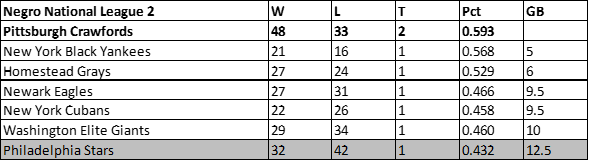
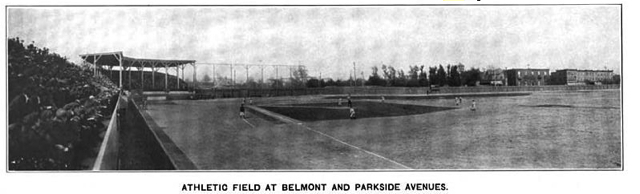
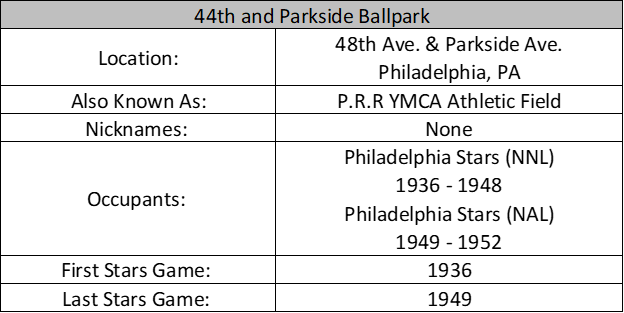
The Philadelphia Stars moved into the ballpark at 44th and Parkside for the 1936 season after playing the previous two years at Passon Field. Their new surroundings did not help the team on the field or in the standings as they finished at the bottom of the Negro National League at 32-42-1.
The Stars had a quartet of players hit over the .300 mark: First baseman Jud Wilson (.337/8/39), third baseman Dewey Creacy (.301/1/29), left fielder Roy Parnell (.367/4/32) and center fielder Turkey Stearnes (.352/10/43). Stearnes led the NNL in triples with five.

N.N.L. Triples Leader (5)
Turkey Stearnes (PHI)
The Star’s pitching staff was the teams Achilles heel as they struggled to a team ERA of 5.31. The starting five consisted of: Webster McDonald (5/5.23/35), Bert Hunter (5/4.26/56), Laymon Yokely (5/4.68/38), Rocky Ellis (2/5.81/30) and Samuel Thompson (4/5.02/23). Lefthander Slim Jones (2/6.96/22) provided little relief in 14 games and 42.2 innings. McDonald led the NNL in games (19), hits allowed (128) and batters faced (494).
1937
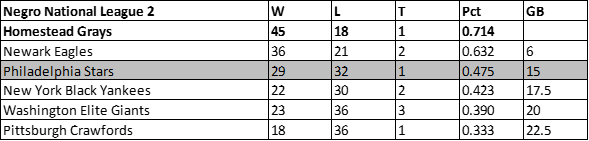
In 1937, the Philadelphia Stars rose to third place in the NNL finishing 15 games behind the Homestead Grays. Philadelphia won three less games than the prior year but moved up in the league due to the dominance of the Grays against other opposition.
The offense hit a collective .317 for the season averaging 2.6 runs per game. First baseman Jud Wilson led the team in average hitting .317 in twenty-three games. Second baseman Jake Dunn (.227/1/15) left fielder Paul Dixon (.288/1/13), utility player Curtis Harris (.309/1/18) and pitchers Slim Jones (.333/1/7) and Webster McDonald (.273/1/3) each hit one home run for th Stars. Harris led the team in RBIs coming off the bench for eighteen runs driven in.
The Stars pitching staff improved marginally but still posted a team ERA of 4.90. Philadelphia ran nine different starters out to the mound with varying degrees of success. Samuel Thompson (5/4.19/27) won five of nine decisions in eight starts. Thompson would lead the league in shutouts (1) and home runs allowed (9). Webster McDonald (3/5.4024) went 3-3 in eleven starts allowing 43 runs in 63.1 innings. Lefthander Jim Missouri (3/3.00/31) led the league in shutouts (1), walks per nine innings (1.7) and strikeout to walk ratio (3.44).
1938

The Stars continued to climb in the NNL standings in 1938 moving into second place behind the Homestead Grays. The Stars ended the season at 41-32-3 just 9.5 games behind the Grays.
The Stars pitching staff regressed to a combined 5.28 ERA in 1938. Henry McHenry (7/3.72/61) and Spoon Carter (7/6.01/55) combined for a 14-4 record on the season. Carter led the league in games played (20), hits allowed (124), earned runs (73), home runs allowed (13) and walks (47) but still managed a 7-3 record. Webster McDonald (5/4.98/38) finished 5-6 and led the league in losses (6) and games started (14). Lefty Jim Missouri posted a 4-5 record with 30 strikeouts and a whopping 7.66 ERA. Henry Miller went 5-3 with a 5.20 ERA and 25 punchouts.
On the offensive side, second baseman Pat Patterson (.306/7/36) topped the team in home runs while leading the league in doubles with 13. Catcher Bill Perkins (.311/7/45) also hit seven home runs and led the league in walks (29). Right fielder Clyde Spearman (.305/1/28) topped the NNL in games played (65), plate appearances (281), at-bats (243), hits (74), triples (5) and walks (29).
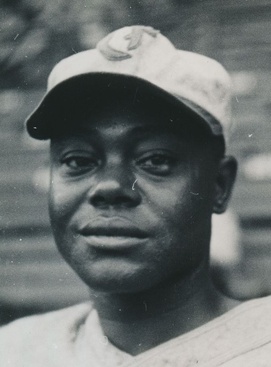
N.N.L. Triples Leader (5)
Clyde Spearman (PHI)
Shortstop Jake Dunn (.251/5/34) and catcher Larry Brown (.333/0/0) were both selected to the All-Star game.
1939

The Stars fell back to sixth place during the 1939 season. They finished the year at 24-29-1, eleven games behind perpetual champion Homestead Grays.
Shortstop Chester WIlliams (.338/1/26) led the NNL in plate appearances (211), at-bats (201) and hits (68).
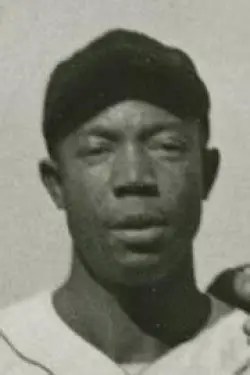
N.N.L. Hits Leader (68)
Second baseman Pat Patterson (.348/4/36) led the league in runs scored (43) and triples (4). Center fielder Gene Benson (.283/6/30) topped the team with six home runs and led the league in games played with fifty. Patterson along with left fielder Roy Parnell (.313/2/16) and second baseman Leroy Morney (.222/0/0) were selected to play in the All-Star game.
Fellow lefty starter’s Jim Missouri (3/5.66/43) and Roy Welmaker (3/6.19/36) got the bulk of the Stars starts combining for a 6-8 record. Missouri topped the league in games started (11), shutouts (2), saves (1) and walks (40). Henry McHenry (11/4.06/40) led the league in WAR (2.2), wins (11), games (20), complete games (8), saves (1), earned runs (53), innings pitched (106.1) and hits allowed (107) as a starter/reliever.
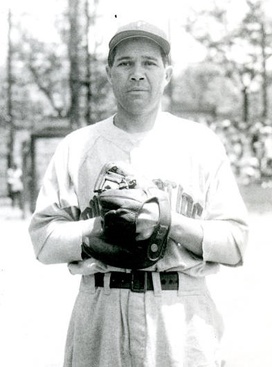
N.N.L. Wins Leader (11)
Henry McHenry (PHI)
1940

1940 was much of the same for the Philadelphia Stars. They won one more game than in 1939 and moved up to fifth place in the NNL. The Stars finished with a 25-32-1 record, eleven games back of the Homestead Grays.
Henry McHenry (11/4.12/86) won eleven of eighteen decisions and paced the NNL in hits allowed (152), strikeouts (86), wild pitches (2), walks per nine innings (2.4) and strikeout to walk ratio (2.21).
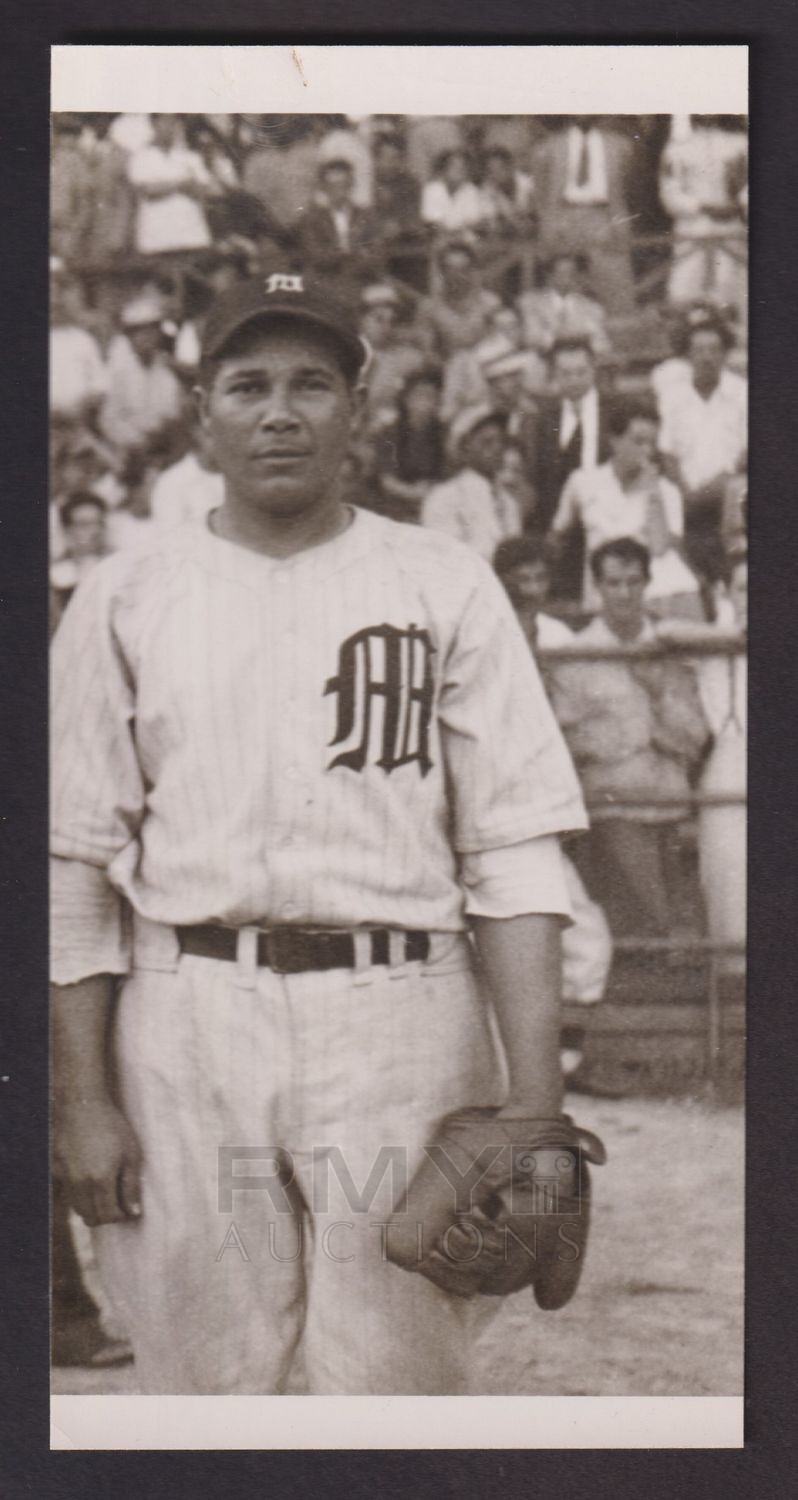
N.N.L. Strikeout Leader (86)
Henry McHenry (PHI)
Ches Buchanan (4/3.89/35), Samuel Thompson (2/5.06/31) and Roy Welmaker (2/5.46/13) combined for a 8-14 mark in twenty-five starts. McHenry was selected as an All-Star for his efforts on the hill.
First Baseman Jim West (.338/0/31) led the team with a .338 average and a team high thirty-one RBIs. Shortstop Larnie Jordan (.315/2/29) left fielder Roy Parnell (.309/4/27), center fielder Gene Benson (.311/5/30) and right fielder Darius Bea (.331/3/30) all eclipsed the .300 mark for the season. Bea would top the league in intentional walks with one.
1941
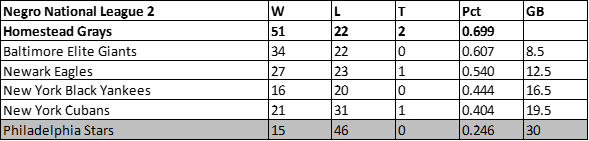
The Philadelphia Stars plummeted to the bottom of the Negro National League in 1941. The Stars went 3-13 to start the season and cost Roy Parnell the manager’s role. Oscar Charleston took over as skipper, but the Stars won only fifteen of sixty-one contests finishing 30 games behind the Homestead Grays.
Despite being relieved of his managerial duties, Parnell (.291/1/18) had a solid year at the plate. Shortstop Pat Patterson (.315/0/6) led the team with a .315 batting average in 24 games. First baseman Jim West (.246/3/22) had the strongest season of the position players leading the team in home runs (3) and RBIs (22).
The Star’s pitching staff was mediocre posting a collective 4.61 ERA. The starting rotation of Henry McHenry (7/3.75/67), Joe Fillmore (1/5.61/38), Edsall Walker (3/5.13/34), Ches Buchanan (1/5.82/29) and Chet Brewer (2/3.20/21) started fifty-three of the sixty-one games. McHenry led the NNL in losses (12), games started (18), complete games (15), innings pitched (144.0) earned runs (60) and batters faced (626).
1942
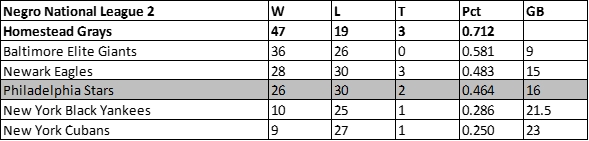
The Philadelphia Stars improved by eleven wins in 1942 and vaulted into fourth place in the Negro National League. The Stars were buoyed by an improved pitching staff that sported a collective 3.98 ERA.
Much of the staff’s improvement was due to the addition of Barney Brown (8/3.23/77). Brown returned from World War II and joined Philadelphia after playing for the New York Black Yankees from 1936-1938. Brown led the league in losses (9), games played (22), games started (16), complete games (13), shutouts (3), saves (1), innings pitched (153.1) hits allowed (148) and earned runs (55). Brown earned an All-Star invitation. Joe Fillmore (3/4.20/38), Terris McDuffie (7/3.74/34) and Ches Buchanan (4/4.17/27) filled out the starting rotation with Fillmore sharing the league lead in saves (1).
Shortstop Buster Clarkson topped the team in all three triple crown categories hitting .355 with eight home runs and forty-one RBIs. First baseman Jim West (.274/3/38) and second baseman Pat Patterson (.254/2/12) both earned All-Star nods. Third baseman Henry Spearman contributed a .308 average with four home runs and 32 runs driven in.
1943
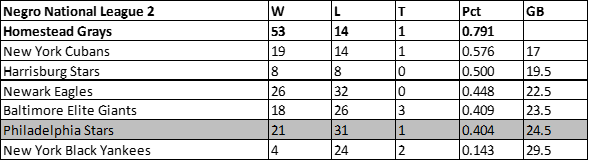
The Stars fell back by five wins in 1943 and dropped to sixth place in the Negro National League. The Stars would post a 21-31-1 record and end the season 24.5 games behind the Homestead Grays.
Center fielder Gene Benson (.337/0/37) topped the team in batting average while first baseman Jim West (.310/2/43) and right fielder Homer Curry (.293/2/23) both hit two home runs to lead the team. West would also pace the Stars with 43 RBIs. Part time Stars Leon Day (.467/0/3) and Lennie Pearson (.154/0/3) would both be selected for the All-Star game.
The Stars pitching staff regressed in 1943 to a team ERA of 5.48. Barney Brown (5/4.66/50) posted a 5-8 mark and led the league in earned runs allowed (67) and home runs allowed (8). Ches Buchanan (6/5.15/16) won six of ten decisions and was the only starting pitcher to record a winning record. Homer Curry (3/4.75/18) went 3-3 on the season and led the league in home runs allowed (0.0) in seven games.
1944
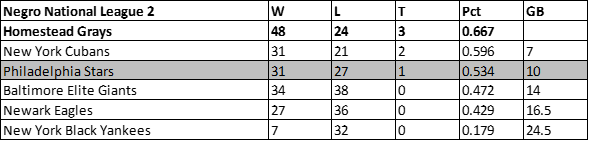
The Stars increased their win total by ten and moved up to third place in the 1944 National Negro League season. The Stars finished ten games behind the perennial champion Homestead Grays.
The offense hit a collective .311 for the season and were led by second baseman Marvin Williams (.353/3/50). Williams led the league in doubles (17) and RBIs (50) while garnering an All-Star invite.
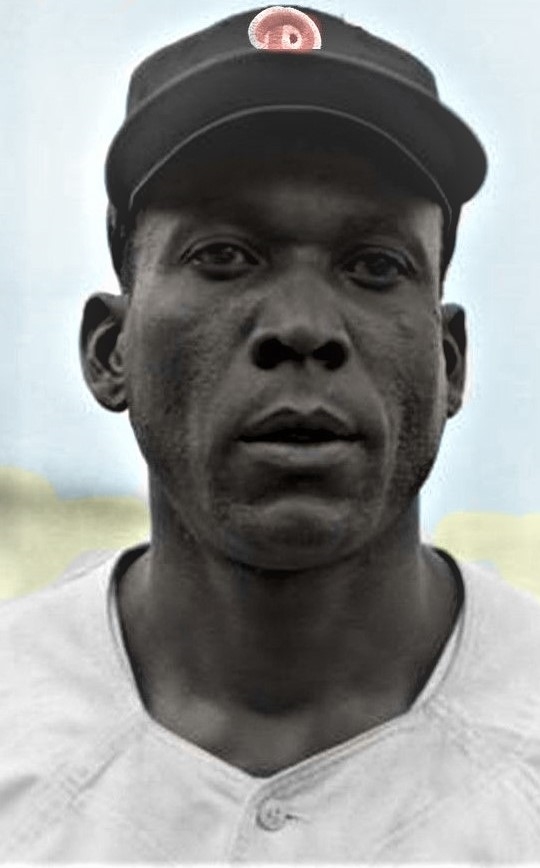
N.N.L. Doubles Leader (17)
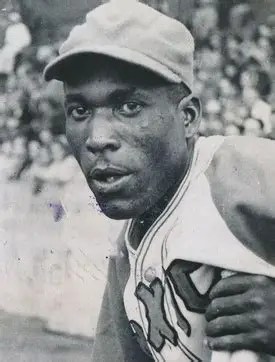
N.N.L. RBI Leader (50)
Williams and left fielder Homer Curry (.291/3/27) topped the Stars in homers with three apiece. First baseman Jim West (.358/1/33) paced the team with a .358 batting average. Center fielder Gene Benson (.316/2/32) led the league in at-bats with 228. Roy Campanella (.200/0/0) and Tommy Butts (.500/0/2) each played a single game for the Stars and were chosen for the All-Star game.
The Stars pitching staff combined for a 3.74 team ERA in 1944. Bill Ricks (11/2.75/103) led the way posting an 11-7 record in 18 starts. Ricks led the league in WAR (3.1), wins (11), games played (22) games started (18), innings pitched (152.0), hits allowed (154), earned runs (48), home runs allowed (5), strikeouts (103) and batters faced (672).
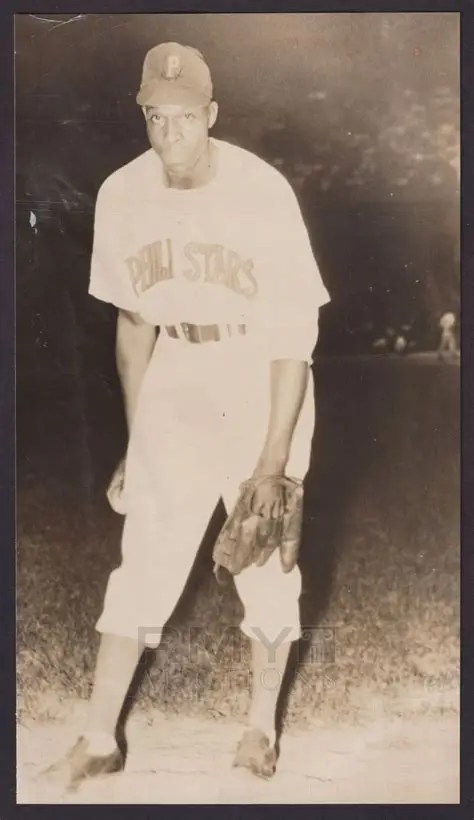
N.N.L. Wins Leader (11)
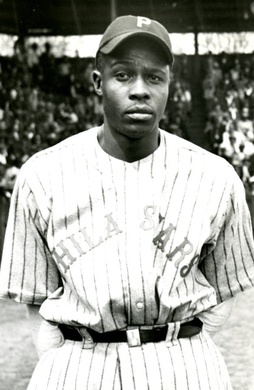
N.N.L. Strikeouts Leader (103)
Barney Brown (7/4.94/42), Henry Miller (6/2.75/36) and Hubert Glenn (4/3.65/18) rounded out the starting rotation while Pete Sunkett (1/4.41/13) provided relief and finished a league high six games.
1945
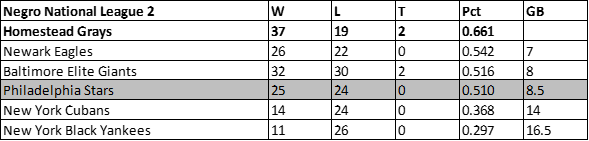
The Philadelphia Stars dropped to fourth place in 1945, 8.5 games behind the champion Homestead Grays. The Stars finished the year above .500 at 25-24.
Lefthander Roy Partlow (8/2.47/80) posted an 8-4 mark for the Stars and led the league in games played (18) and walks allowed (38). Righty Wilmer Harris (2/6.06/40) struggled to a 2-8 record while leading the league in losses (8), saves (1), earned runs (46) and hit batters (4). Henry Miller won four games in six starts and posted a respectable 2.72 ERA with twenty-three punchouts. Bill Ricks combined to start/relieve fifteen games and led the league in games finished (8), saves (1) and home runs allowed per nine innings (0.0).
Shortstop Frankie Austin (.375/2/34) led the Stars offensively. Austin led the league in hits (81), stolen bases (10) and batting average (.375) earning an All-Star invitation.
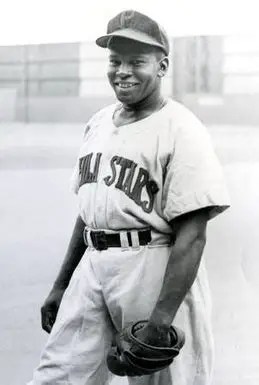
N.N.L. Batting Champion (.375)

N.N.L. Stolen Base Leader (10)
Right fielder Ed Stone posted a .333 average with 24 runs driven in on the year. Center fielder Gene Benson (.338/1/33) earned all All-Star nod along with Austin. First baseman Jim West (.269/2/36) topped the Stars in RBIs with 36.
1946

Despite winning six more games than the prior campaign, the Philadelphia Stars dropped to fifth place in the Negro National League in 1946. The Stars would finish with a 31-36-2 record, 17.5 games behind the newly championed Newark Eagles.
A trio of position players received All-Star invitations: Shortstop Franke Austin (.325/0/32), third baseman Murray Watkins (.269/0/15) and center fielder Gene Benson (.321/0/39). Austin led the team in batting average at .325 and led the league in sacrifice hits with 12. First baseman Doc Dennis (.310/7/53) led the team in home runs and RBIs.
The Stars pitching staff featured two ten-game winners. Henry McHenry (10/3.65/90) posted a 10-6 record and led the league in games played (24), innings pitched (140.2), hits allowed (141) and batters faced (598). Barney Brown (10/2.77/69) won ten of sixteen decisions and led the league in WAR (4.4) earning an All-Star nod. Joe Fillmore (5/4.78/40) filled the role of third starter. Wilmer Harris (1/6.12/54), Bill Ricks (1/4.45/25) and Eddie Jefferson (1/6.03/10) provided relief and spot starts.
1947
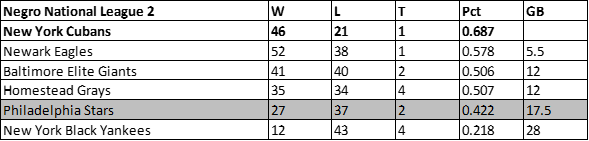
The Philadelphia Stars remained mired in fifth place in 1947. The Stars finished 17.5 games behind the champion New York Cubans with a record of 27-37-2.
The Stars pitching staff toiled and produced a team ERA of 5.06 for the season. Henry Miller (8/3.85/79) was the lone bright spot for the Stars notching an 8-2 record and a spot on the All-Star team. Roy Partlow (5/3.71/58), Barney Brown (5/4.24/29) and Wilmer Harris (3/4.21/24) combined to start twenty-six of the Star’s sixty-six games. Henry McHenry (1/5.65/23), Harold Gould (1/8.35/12), Al Wilmore (1/9.87/16) and Bill Ricks (0/10.64/2) managed just three wins between them in nine starts.
Shortstop Frankie Austin (.322/0/25) led the team in average and earned an All-Star bid. Center fielder Gene Benson (.291/1/31) topped the team in RBIs with 31. Catcher Bill Cash (.303/2/28) hit two home runs to pace the Stars. Right fielder Archie Brathwaite (.285/0/24) swiped a team high five bases.
1948
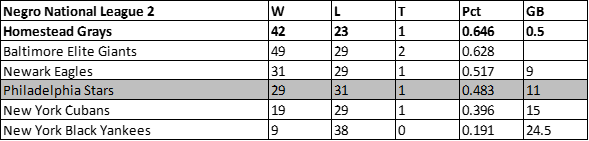
The Philadelphia Stars played their last season in the Negro National League in 1948. Integration of the National and American Leagues started the decline in attendance for Negro League teams. The Stars ended the season in fourth place, eleven games behind the champion Homestead Grays.
Three Stars players were selected for the All-Star games: Catcher Bill Cash (.250/2/13), George Crowe (.500/1/1) and Frankie Austin (.356/1/24). Cash led the N.N.L. in doubles with six.
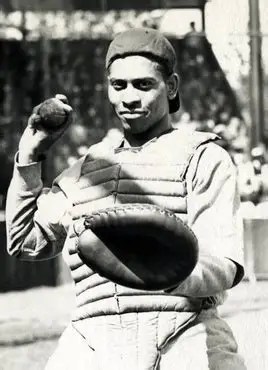
N.N.L. Doubles Leader (6)
Austin led the team in average and RBIs while leading the league in WAR (3.1) and doubles (16).
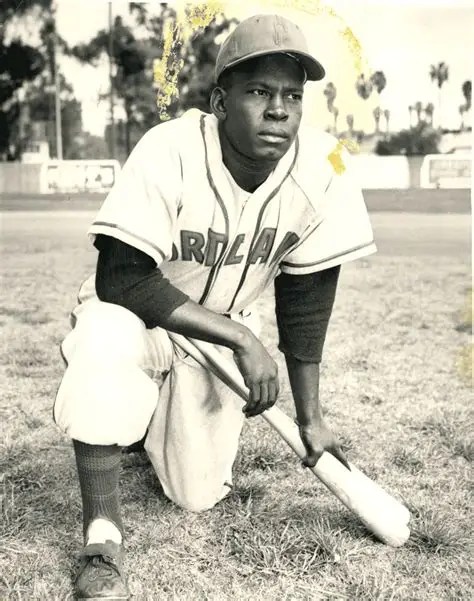
N.N.L. Doubles Leader (16)
The Stars pitching staff performed well in 1948 posting a combined 3.50 ERA. Henry Miller (7/3.95/68) went 7-6 and led the league in games played (18), games started (14), earned runs allowed (49) and walks allowed (51). Henry McHenry (7/3.93/63) also recorded a 7-6 mark in 12 starts. Lefthander Roy Partlow (2/3.32/33) won two and lost two in eight starts for the Stars. Barney Brown (3/2.3844) posted a 3-5 record in six starts and led the league strikeouts per nine innings (7.0). Bill Ricks (6/1.56/28) won six and lost none while leading the league in winning percentage (1.000), ERA (1.56), ERA+ (219) and home runs allowed per nine innings (0.0).
N.N.L. ERA Leader (1.56)
 Curve in the Dirt.com