


1891
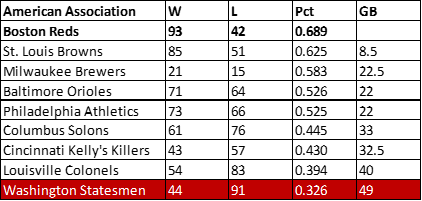
The 1891 Statesmen of Washington ballclub finished dead-last in the eight team American Association. After the final game had been played, the Statesmen finished forty-nine games behind the front-running Boston Reds. The offense was led by catcher, Deacon McGuire, who slashed .303/3/66. The Youngstown, Ohio native would play for 13 different clubs during his career and manage three more. McGuire would later challenge the “Reserve Clause” by signing a contract with the Detroit Tigers in 1902 while still under contract with the Brooklyn club. Frank Foreman collected 18 wins and 170 whiffs while posting a 3.73 ERA in 43 games. Righthander, Wilfred “Kid” Carsey was a workhorse for the staff, pitching 413 innings in 54 games. After the season, the Statesmen dis-banded and a new club called the Wahington Senators joined the National League.
1892

The newly formed Washington Senators joined the National League in 1892 and proceeded to finish 10th in the 12-team league. The Sens treaded water in the first half of the split-season, finishing five games under .500 and in seventh overall. The second half was unkind to the Washington team as they finished last with a 23-52 record. Outfielder, Dummy Hoy, hit .282 for the season while first baseman, Henry Larkin, clubbed eight homers and batted in 96. The pitchers were helmed by southpaw Frank Killen who recorded 29 wins,147 strikeouts and a 3.31earned run average. Benjamin Harrison became the first sitting President to attend a baseball game on June 6th. 
Benjamin Harrison
First Sitting President to Attend a Game
Redlegs vs. Senators
1893
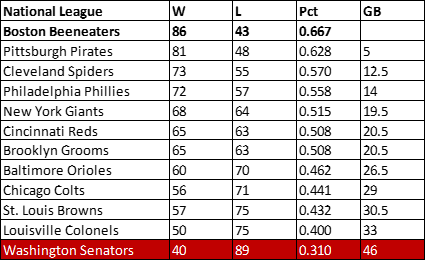
The Senators second year in the National League saw them fall to the cellar, 46 games behind the Beeneaters of Boston. The second half of the season was particularly brutal as the Sens won only 14 of 63 decisions. Henry Larkin posted the highest batting average at .317. Second Baseman, Sam Wise, homered five times to lead the club. Future Hall-of-Famer, Jim O’Rourke, led the team with 95 runs batted in during his only season in Washington as Player/Manager. The Senators futility reached it’s peak in late July and early August as they dropped 12 straight games and fell out of contention for good. Senator fans were witnesses to history on August 16th, when Oriole pitcher, Bill Hawke, no-hit the Senators.
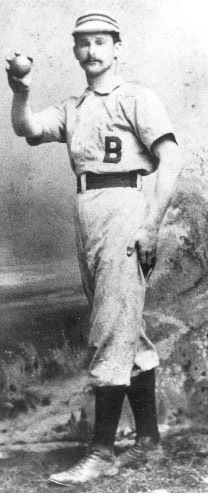
No Hitter:
Bill Hawke (BAL)
vs. Senators (5-0)
The Senators pitchers struggled throughout the season, posting a team ERA of 5.56. Duke Esper and Al Maul each managed to record 12 wins apiece. Esper’s ERA of 4.71 was best on the bump for Washington. Jouett Meekin struck out 91 in 245 innings to pace the staff.
1894
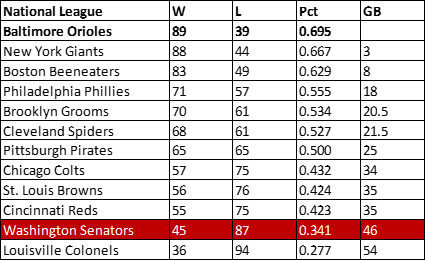
The 1894 Senators improved by five wins and moved out of the basement of the National League. The month of May ruined any chance of Washington being a challenger for the National League pennant. They posted a 4-19 record which included a 17-game losing streak. Third Baseman, Bill Joyce hit .355 with 17 round-trippers and first baseman, Ed Cartwright, plated 105 runs. While the offense was much improved with a team batting average of .287, the pitchers fell short again with a collective 5.51 ERA. Righthander, Win Mercer won 17 games, struck out 72 and allowed 3.85 runs per slate. One of the few highlights was outfielder, Bill Hassamaer, hitting for the cycle on June 13th versus the Brown Stockings of St. Louis.
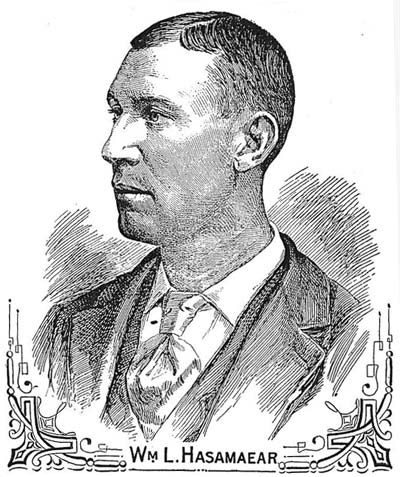
Cycle:
Bill Hassamaer (WAS)
vs. St. Louis Brown Stockings
1895


The Senators won two less games in 1895 under second year manager Gus Schmelz but managed to climb to tenth place in the standings. Pitching was once again the culprit as the team ERA came in at 5.26 despite the fact that Al Maul had the lowest ERA (2.45) in the National League.
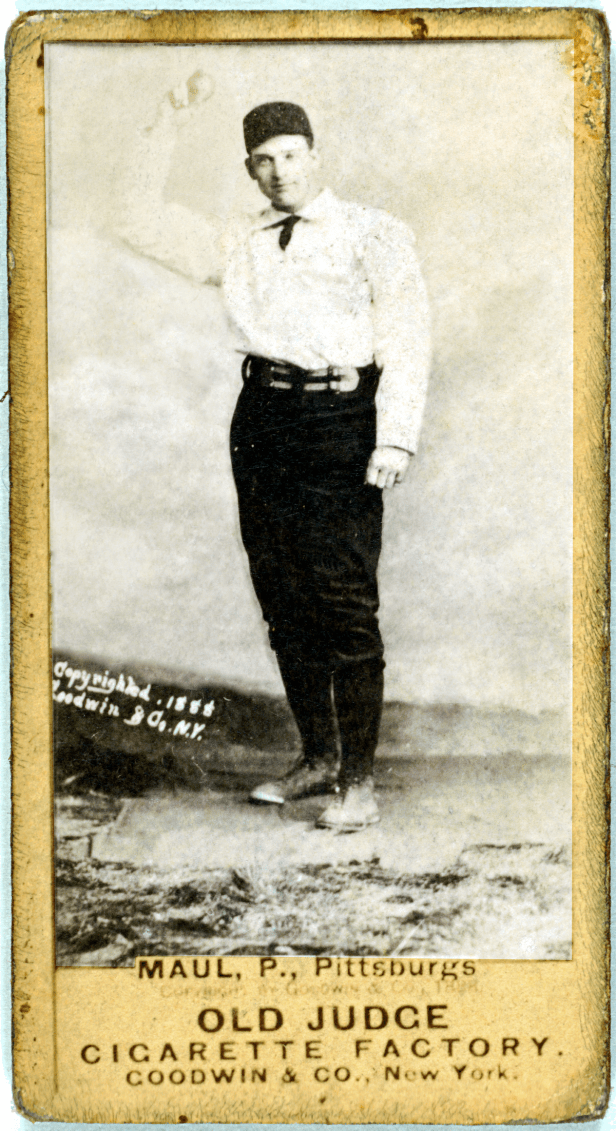
N. L. ERA Leader (2.45)
Al Maul (WAS)
Win Mercer led the team in wins (13) and strikeouts (85) in 313+ innings. The offense fared better with Deacon McGuire batting .336 and Bill Joyce clubbing 17 home runs, both tallying 97 RBIs on the season. Outfielder Kip Selbach led all hitters in the National League with 22 triples.
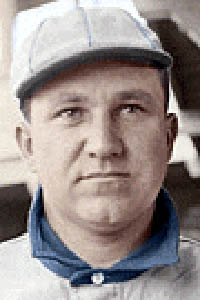
N. L. Triples Leader (22)
Kip Selbach (WAS)
On September 30th, first baseman Ed Cartwright hit for the cycle against the visiting Beeneaters.

Cycle:
Ed Cartwright (WAS)
vs. Boston Beeneaters
1895 marked the highest attendance at National Park with over 153,000 spectators passing through the turnstiles.
1896

The 1896 season showed a 15-game improvement for the Senators propelling them to a ninth-place finish, their highest since joining the Senior Circuit. Shortstop, Gene DeMontreville, led the offense with .343 batting average and 8 home runs. Outfielder, Kip Selbach drove in 100 runs, best of the regulars. Bill Joyce tied for the league lead in home runs, splitting his season between the Senators and Giants.

N. L. Co-Home Run Leader (13)
Bill Joyce (WAS/NYG)
Win Mercer piled up 25 wins for the Senators while striking out 94 and logging a 4.13 ERA. Righthander Doc McJames topped the team with 103 strikeouts.
1897
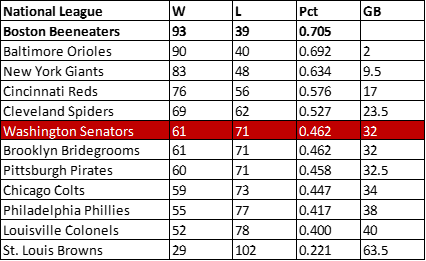
Washington continued to improve on the field and in the National League standings in 1897, finishing in the top half of the division for the first time in club history. The pitching staff was much improved. Anchored by starters Win Mercer, Silver King, Cy Swaim and Doc McJames (who led the National League in Strikeouts)
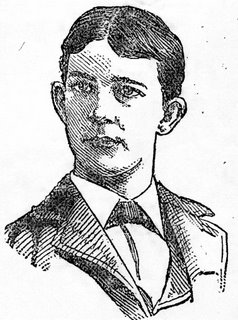
N. L. Co-Strikeout Leader (156)
Doc McJames (WAS)
the Sens lowered their team ERA to 4.01. At the plate is where this version of the Senators excelled. They hit .297 as a collective and Deacon McGuire, Tommy Tucker, Gene DeMontreville and Kip Selbach all hit over .300 for the season. Tucker, Selbach and Tommy Brown each registered five home runs and DeMontreville contributed 93 runs batted in. The Washington faithful viewed the upcoming season with cautious optimism.
1898

The Washington nine, regressed in 1898, winning ten less games and falling to eleventh place in the National League. The second half of the season sealed their pennant hopes, dropping 14 consecutive games from August 27th through September 11th. John Anderson was the star on offense, leading the team in Batting Average, Home Runs and RBIs (.305/9/71). Anderson also tallied more triples (22) than any other player in the National League.

N. L. Triples Leader (22)
John Anderson (WAS/BKN)
Righty, Gus Weyhing, won 15 and struck out 92, both tops on the team. Frank Killen sported a team-best ERA of 3.58 in limited innings (128.1).
1899
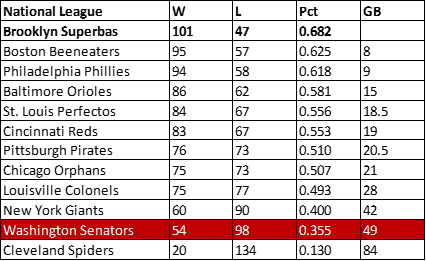
In 1899, the Senators improved marginally, winning three more games that the prior year. The Senators finished 11th out of 12 teams in the league. The offense was led by John “Buck” Freeman who belted a league leading 25 home runs to pair with a .318 average and 122 runs batted in.
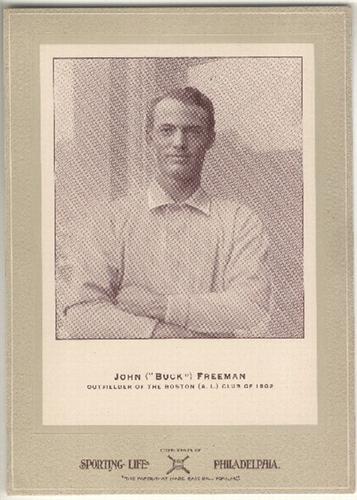
N. L. Home Run Leader (25)
Buck Freeman (WAS)
First baseman, Dan McGann, contributed with a team-leading .338 batting average. On the pitching staff, Gus Weyhing and Bill Dineen both hit double digits in wins with 17 and 14 respectively. This would be the Senators last season in the National League as the league was contracted and the Washington club disbanded.
1904
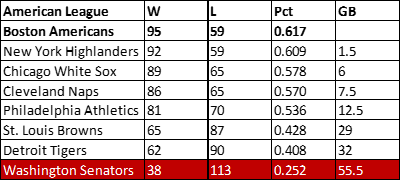
The 1904 edition of the Senators picked up where the previous version left off. Washington posted one of the worst winning percentages of the 20th century. American League Park II did not help the Sens cause as they finished 55 1/2 games from the American League gonfalon. Out of the gate, the Washington team struggled, posting an 0-13-1 record in their first 14 attempts. Their longest winning streak came in early September as they took three in a row, on the road in St. Louis. Shortstop, Joe Cassidy, finished the season tied for the league lead in Triples with 19.

Co-Triples Leader (19)
Joe Cassidy (WAS)
Frist Baseman, Jake Stahl led the team in batting average (.262), home runs (3) and runs batted in (50). Southpaw, Casey Patten, paced the pitchers with 14 wins, a 3.07 ERA and 150 strikeouts. There was nowhere to go but up in 1905.
1905

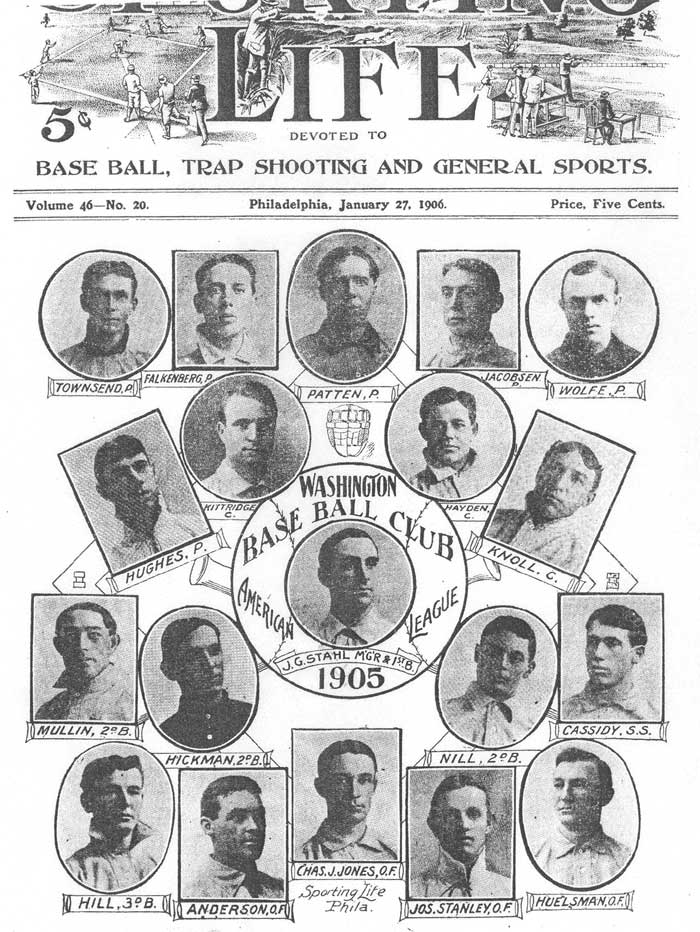
The mood in Washington D.C. was much improved in 1905 as Theodore Roosevelt was inaugurated as President for a second term. The 1905 Senators also improved by 26 wins from 1904, finishing 7th in the Junior circuit. On the strength of a solid August, the Washington club finished one game below .500 in the second half of the season. Jake Stahl (Mgr/1B) again led the team in home runs and RBIs with five and sixty-six. Charlie Hickman, hit .311 in a platoon role at second base. Second-year Senator, Tom Hughes, led the team in wins (17), ERA (2.35) and Strikeouts (149).
1906

The 1906 season was much of the same for the Washington nine. Finishing seventh out of eight contenders in the American League, the Senators won nine less games than the previous year. Outfielder, John Anderson headed the team with 70 runs batted in and was the co-leader in stolen bases in the American League.

A. L. Co-Stolen Base Leader (39)
John Anderson (WAS)
Outfielder, Charlie Hickman led all regulars with a .284 batting average and nine long balls. Casey Patten won 19 games with a miniscule 2.17 earned run average. Cy Falkenberg punched out 178 batters faced. The Senators longest win streak came in early August where they won six straight road contests in St. Louis and Detroit. Their longest futility streak came at the end of May, losing eight-consecutive to the Browns, Naps and Yankees. 1906 would be the last season for Manager, Jake Stahl.
1907
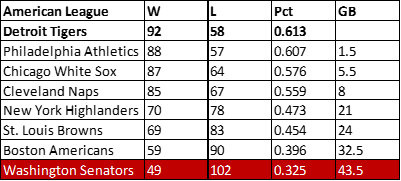
The 1907 season saw the Senators return to the cellar under new skipper Joe Cantillon. In June, the Senators purchased the contract of second baseman Jake Delahanty (brother of Ed) from the St. Louis Browns. Delahanty would lead the team in batting average, home runs and RBIs (.292/2/54). Delahanty’s arrival did not show immediate impact as the Senators dropped eight straight games to the Naps, Athletics and Highlanders to finish the month. The Senator’s best stretch was a four-game sweep of the Americans at home in mid-September. Casey Patten notched 12 wins, Charlie Smith struck out 119 and rookie Walter Johnson posted a 1.88 ERA in 14 games. The promise of Johnson’s first season gave hope for the future.
1908


Washington once again finished in the bottom half of the American League standings in 1908. Jim Delahanty hit the best of the regulars with a .317 average. Off-season acquisition, acquired from the Browns, Ollie Pickering hit two home runs to pace the Sens. First-Sacker, Jerry Freeman drove in 45 runs. Washington cobbled together two five-game winning streaks, one in late May and the other in early October. The Senators had a dreadful start to June, losing eleven straight games from June 3rd to June 15th. Tom Hughes won 18 games in 43 appearances while striking out 165 and logging a 2.21 ERA. Future Hall-of-Famer, Walter Johnson contributed 14 wins, 160 K’s and a 1.65 ERA.
1909

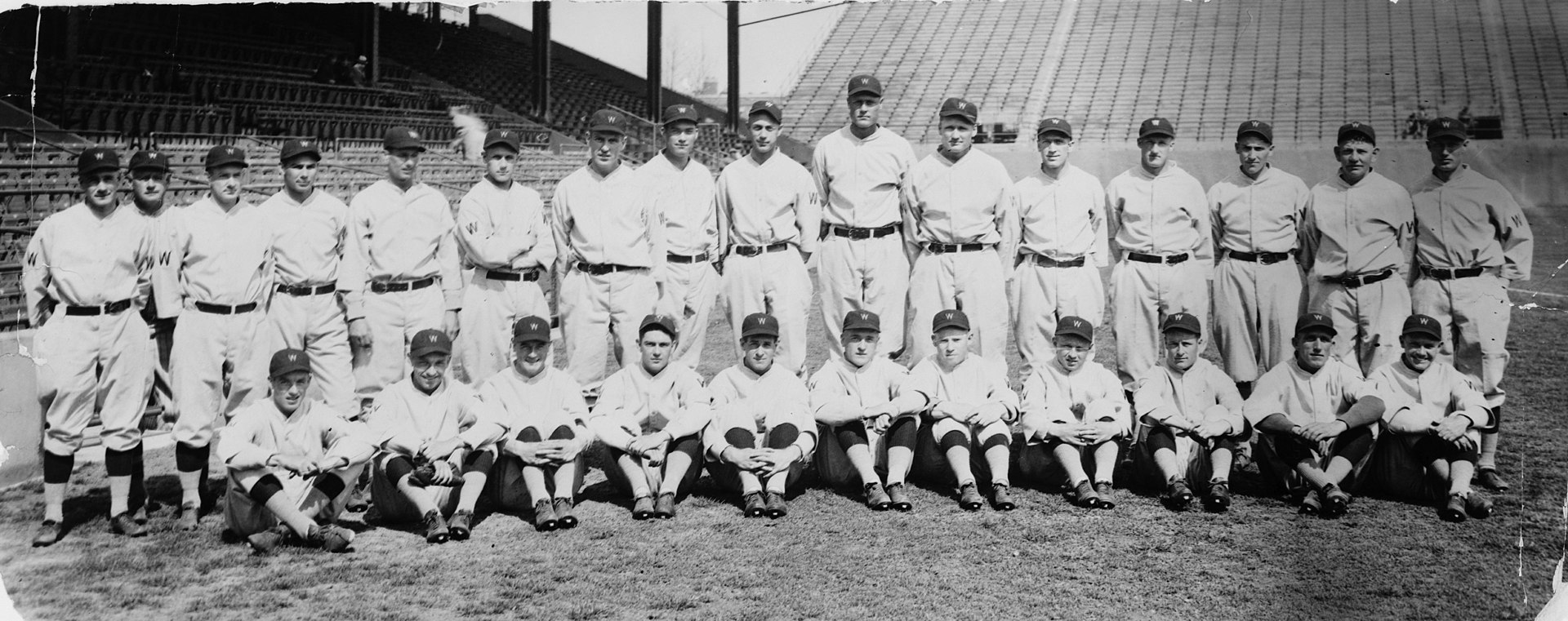
1909 saw the Senators return to the bottom of the American League. July was disastrous for Washington as they posted a 5-29 record including an eleven-game losing streak, which is the most losses by a team in one month. Outfielder, Jack Lelivelt, had the highest batting average at .292. Backup first baseman, Bob Unglaub had the most dingers with 3 and also led the team with 41 runs batted in. Walter “the Big Train” Johnson recorded 13 wins along with 164 punchouts and a 2.22 ERA. No other pitcher won more than seven for the Sens.
1910
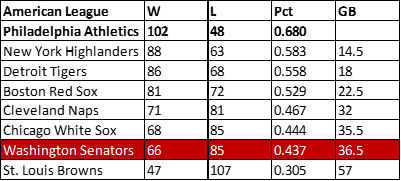
In their final season at National Park, the Senators won 24 more games than the prior year. Despite the marked improvement, they still finished in 7th place in the American League. New Manager, Jimmy McAleer had the boys playing a better brand of ball. The offense still struggled with Clyde Milan leading the way with a .279 average. Kid Eberfeld and Doc Gessler both tallied two home runs on the year. Shortstop, George McBride, topped the team with 55 RBIs. Walter Johson led the pitching staff with 25 wins, a 1.36 ERA and recorded 313 strikeouts to lead the American League.

Strikeout Leader (313)
Walter Johnson (WAS)
The Washington faithful witnessed history on July 19 when Denton True “Cy” Young won his 500th career game.

500th Win:
Cy Young (CLE)
The Senators split a doubleheader with Boston on their final day at National Park, October 6th, 1910. The Senators would move into their new home, Griffith Stadium, for the 1911 season.
 Curve in the Dirt.com
Great blog I enjoyed rreading
LikeLike